
A Beginner’s Guide to Collecting Trading Cards: Packs, Condition and Storage
Choose between booster packs, sealed boxes, decks, and singles. Then learn how to check condition, protect your cards, and decide whether grading makes sense.
Shipwrecked Collectibles
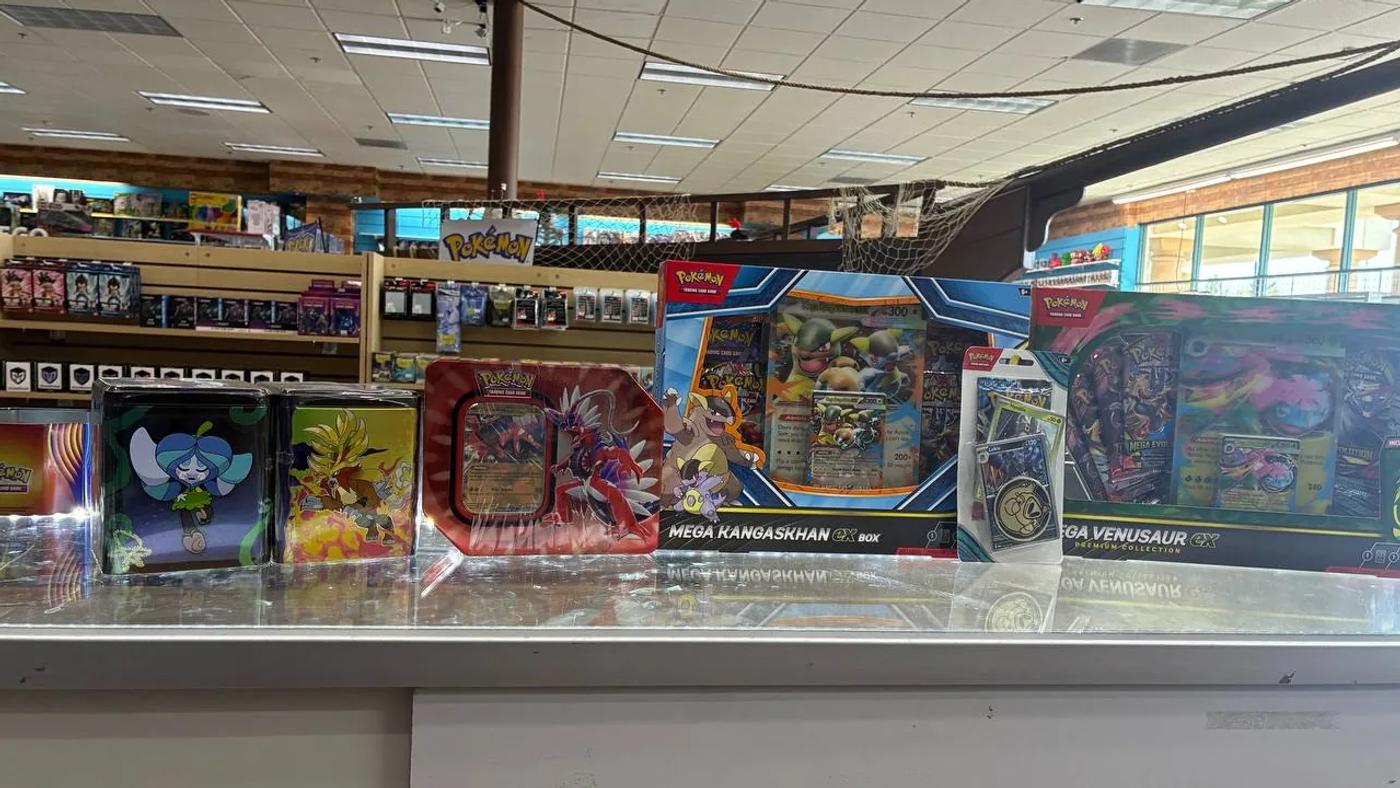
Before buying a trading card pack, pick one thing you’d like to do with the cards. You might want to learn a game, make a binder page of favorite characters, or collect every card from one set. Each goal points to a different purchase. A starter deck gets you playing, a booster gives you cards to discover, and buying a single is the most direct way to fill a specific gap.
Booster packs, sealed boxes, and starter decks
- Booster packs are small randomized assortments. They’re a manageable way to sample a set and see whether you like the art or mechanics. Look at the game, set, language, and pack type. Packs from the same game can be designed for different ways to play or collect.
- Sealed booster boxes contain multiple packs. Read the exact box contents before comparing offers. A bundle, display box, and deck box can have very different contents, and pull expectations can vary by release. If you only want one card, compare the cost of buying that single before deciding to open a box.
- Starter or preconstructed decks are assembled around a playable list. They’re useful when you want to learn how cards work together. Check whether the product is for one player or two, whether it suits the format you want to play, and whether bonus packs are listed separately.
- Singles let you choose the exact card, printing, language, and condition. This is especially helpful if a binder page is almost full or you want one particular version of a character.
Pick a game or a theme you’ll enjoy
Shipwrecked’s sealed trading card collection includes product lines such as Magic: The Gathering, the One Piece Card Game, and Disney Lorcana. Magic offers several product types, so distinguish a Play Booster from a preconstructed Commander deck. For One Piece, check the language on the listing and compare the set code before buying. If you’re drawn to Disney characters, decide whether your goal is a playable Lorcana deck or a binder built around a favorite character.
Give yourself one set, one deck, or one binder page as a starting point. For a sealed purchase, read the contents printed on the product and look at photos of the actual packaging when available. If the listing leaves the language or pack count unclear, ask Shipwrecked about the product before committing. Keep a little of your budget for sleeves and storage.
Inspect the card under good light
Hold the card by the edges and look at both sides. Tilt it under a light so marks on glossy or foil cards come into view. Look closely at these areas.
- Corners and edges. Look for white spots, fraying, dents, and rounded corners. Check the back of a dark-bordered card, where edge wear can be easier to notice.
- Surface. Look for scratches, print lines, impressions, stains, and creases. A card can look clean straight on and show a small dent only at an angle.
- Centering. Compare opposite borders where the design lets you. Some cards come out of the pack off-center or with small factory marks. “Pack fresh” tells you how it was obtained, so inspect the card before assuming its condition.
- Identity. For a single, compare the set symbol or code, collector number, finish, and language. Standard, foil, alternate-art, and reprinted versions can share a character or card name.
When does professional grading make sense?
Professional grading gives an individual card a condition assessment under a company’s standards. PSA publishes its grading criteria, including how it considers surface defects, corners, edges, and centering. Review the examples before estimating a grade yourself. If you’re considering a submission, compare fees, shipping, insurance, and turnaround with what you want from the card. A favorite binder card or one you want to play can stay ungraded and well protected.
Protect and organize your collection
- Sleeve clean, dry cards in sleeves that match their dimensions. For cards you handle often, use sleeves suited to play.
- For display or storage, put sleeved cards in a side-loading, ringless binder or a suitable storage box. Use a rigid top loader over a sleeve for extra protection when moving individual cards. Check that the pages or box are designed for that thickness.
- Keep cards away from direct sunlight, moisture, and heat. Don’t force them into a crowded pocket or box. Use dividers so cards can stand upright without slumping.
- Track the set code, collector number, language, finish, and quantity. Separate cards you play from those you keep in a binder, and put duplicates in their own section so you can see gaps before buying again.
If seeing the packaging helps you decide, check the Lake Elsinore location before stopping by. Take your starting goal with you. It’s much easier to choose between a deck, a pack, and a box when you already know what you want to do with the cards.